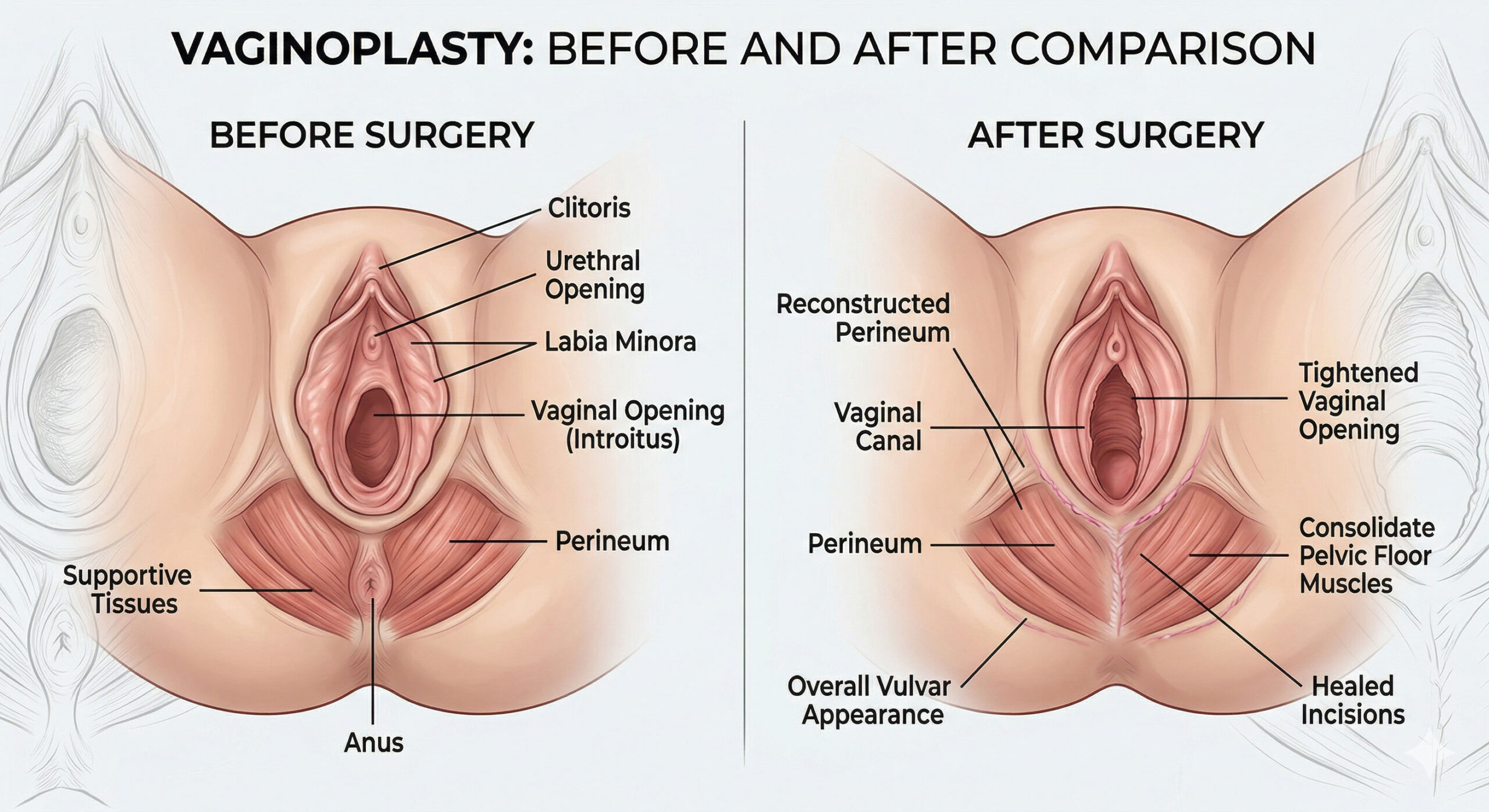
Vaginoplasty (also known as posterior colporrhaphy) is a procedure designed to tighten the vagina. An alternative is noninvasive vaginal tightening through heating tissues with radiofrequency waves or laser. Patients with significant laxity may not experience a benefit from these treatments and may be better candidates for surgical tightening with vaginoplasty.
Reasons Patients Want a Vaginoplasty
After childbirth, women may complain of vaginal laxity, resulting from stretching of tissues and separating of muscles, sometimes to the point that a tampon falls out, and this lack of tone can contribute to sexual dysfunction.
What does a Vaginoplasty do?
A vaginoplasty brings the separated muscles together, and the extra mucosa skin from the back side of the vagina is removed. The external skin can also be removed for a more aesthetic appearance.
Anesthesia for a Vaginoplasty
While a vaginoplasty can be done under local anesthesia, many opt to have it done under general anesthesia.
Preparing for a Vaginoplasty
Patients are asked to do a bowel prep prior to surgery.
Vaginoplasty Procedure
Once the amount of tightening to be done is determined, a pie-shape wedge is marked to delineate the extra skin to be removed from inside the vagina. Beneath the skin, the tissues are tightened with strong sutures. Specially the muscle is fixedOnce the vaginal canal has been tightened, the mucosal skin is sutured closed. If there is external skin that protrudes, this can be reduced as well for a more aesthetic result.
What are the Risks of a Vaginoplasty?
Risks from vaginoplasty include infection, bleeding, pain, along with rare complications.
Recovering from a Vaginoplasty
Patients may have one to two weeks of down time. They may feel a deep ache for the first few days, and there is no tampon use or intercourse for eight weeks. Depending on the amount of tightening performed, some patients may be instructed to use dilators.
What are the Results of a Vaginoplasty?
This procedure typically results in a tighter vaginal canal, which can help enhance sexual satisfaction.
What should I Expect During a Consultation for Aesthetic Genital Plastic Surgery?
During your aesthetic genital plastic surgery consultation be prepared to discuss:
Your surgical goals
Medical conditions, drug allergies and medical treatments
Current medications, vitamins, herbal supplements, alcohol, tobacco and drug use
Previous surgeries
Your surgeon may also:
Evaluate your general health status and any pre-existing health conditions or risk factors
Take photographs
Discuss your options
Recommend a course of treatment
Discuss likely outcomes of aesthetic genital plastic surgery and any risks or potential complications
Discuss the use of anesthesia during your aesthetic genital plastic surgery
It’s very important to understand all aspects of your aesthetic genital plastic surgery. It’s natural to feel some anxiety, whether it’s excitement for your anticipated new look or a bit of preoperative stress. Don’t be shy about discussing these feelings with your plastic surgeon.
Labiaplasty Table of Contents There are a variety of aesthetic genital plastic surgery procedures that may enhance appearance and reduce discomfort. These procedures include labiaplasty, clitoral hood reduction, labia majoraplasty, monsplasty and vaginoplasty. Patients also sometimes refer to
What is a Labia Majoraplasty? Table of Contents A labia majoraplasty is a procedure designed to surgically reduce the size of the outer, hair-bearing labia majora. Reasons Patients Want a
What is Aesthetic Genital Plastic Surgery? Table of Contents There are a variety of aesthetic genital plastic surgery procedures that may enhance appearance and reduce discomfort. These procedures include labiaplasty, clitoral hood reduction, labia majoraplasty, monsplasty and vaginoplasty.