Patients also sometimes refer to these procedures as female genital cosmetic surgery, vaginal rejuvenation, female genital rejuvenation surgery, vulvovaginal plastic surgery and designer vagina surgery, among other terms.
External anatomy of the female genitalia
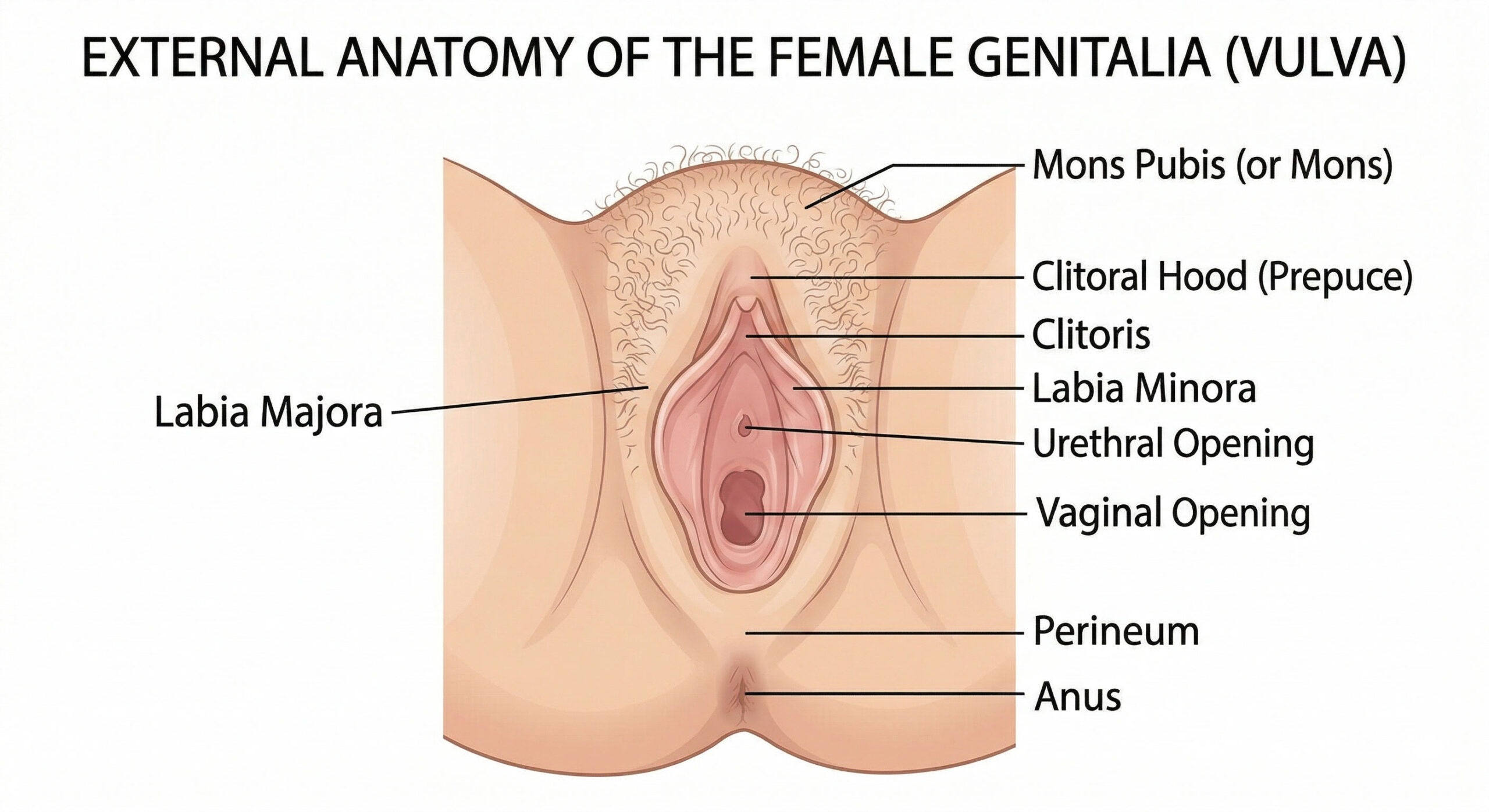
The hair-bearing area over the pubic bone at the upper portion of the female genitalia is called the mons. The hair-bearing outer lips are called the labia majora (singular is labium majus). The inner lips are called the labia minora (singular is labium minus). In the upper portion in the center is the clitoral hood, sometimes called the prepuce, which covers the clitoris in part or entirely. Below the clitoris is the urethral opening, and below that is the vaginal opening.
What is a Labiaplasty?
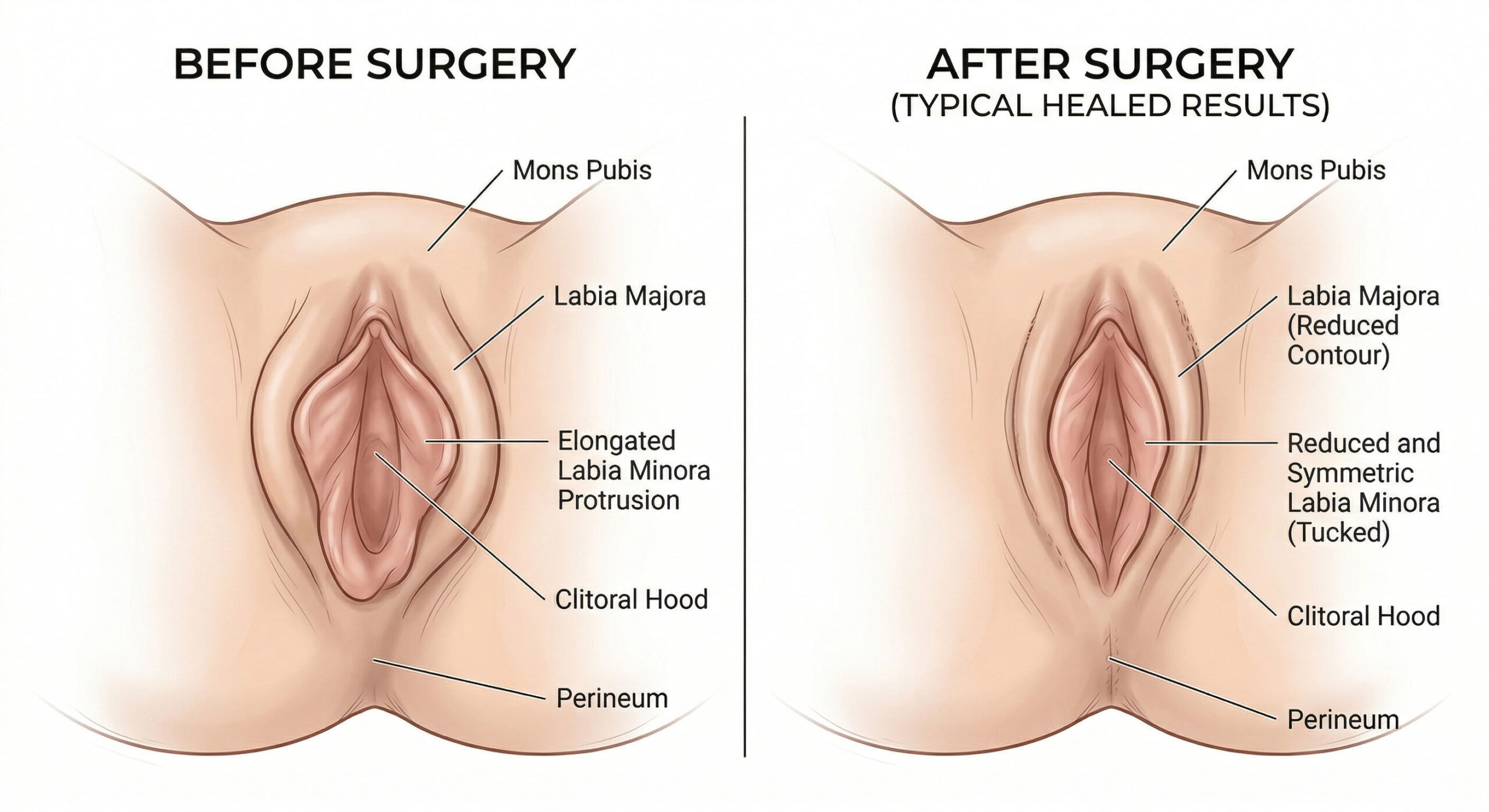
The term labiaplasty refers to a procedure that reduces the length of the labia minora. It is the most commonly performed aesthetic genital plastic surgery and it can relieve symptoms women experience from twisting and tugging of the labia.
Reasons Patients Want a Labiaplasty
Women opt for surgery for a variety of reasons, including pain from twisting and tugging of the labia when riding a bike or during intercourse, itching, irritation and self-consciousness.
What does a Labiaplasty do?
The goal of the procedure is to reduce the labia minora so that they don’t hang below the hair-bearing labia majora. A labiaplasty may be performed to reduce asymmetry when one is longer than the other, or, more commonly, to reduce the length of both labia so that the labia no longer twist, tug or fall out of a bathing suit.
How much does a labiaplasty cost?
The average cost of a labiaplasty is $3,053, according to 2020 statistics from the American Society of Plastic Surgeons. This average cost is only part of the total price – it does not include anesthesia, operating room facilities or other related expenses. Please consult with your plastic surgeon’s office to determine your final fee.
Anesthesia for a labiapasty
Labiaplasty is a procedure that can be done under either local anesthesia with oral sedation or under general anesthesia.
Labiaplasty Procedure
The most common type of labiaplasty is the trim procedure, in which the extra tissue is removed and sewn up directly. Next in popularity is the wedge procedure, which maintains a natural border after a pie-shaped piece of tissue has been removed. Extra folds of the clitoral hood can also be reduced at the same time. Closure is usually done with absorbable sutures.
What are the Risks of a Labiaplasty?
The risks associated with labiaplasty include those of most surgical procedures, including bleeding, hematoma and infection. The most common complication is over-resection. While some women desire an aggressive reduction, this can result in chronic dryness, scarring at or near the vaginal opening and pain with intercourse. Healing problems are more likely to occur with a wedge procedure, particularly if the patient is exposed to substances that cause blood vessels to shrink.
Recovering from a Labiaplasty
Most patients take a week off from work, during which they can reduce swelling and pain by icing with a cold pack sandwiched between the patient’s underpants and an elastic garment, like Spanx. This can be done “twenty minutes on, twenty minutes off.” The patient can also lie with her bottom elevated to reduce swelling.
Patients can resume wearing tampons or having intercourse after four to six weeks. Trim labiaplasty generally allows for a quicker recovery.
While the most distorting swelling is gone by 6 weeks, residual swelling may take six months to disappear.
What are the Results of a Labiaplasty?
Labiaplasty typically results in shorter labia that no longer hang down below the level of the hair-bearing labia majora. Most patients who experienced symptoms from twisting and tugging of their labia generally find relief after surgery. According to multiple studies, labiaplasty surgery is associated with a high satisfaction rate of over 90 percent.
Labiaplasty Table of Contents There are a variety of aesthetic genital plastic surgery procedures that may enhance appearance and reduce discomfort. These procedures include labiaplasty, clitoral hood reduction, labia majoraplasty, monsplasty and vaginoplasty. Patients also sometimes refer to
What is a Labia Majoraplasty? Table of Contents A labia majoraplasty is a procedure designed to surgically reduce the size of the outer, hair-bearing labia majora. Reasons Patients Want a
What is Vaginoplasty? Table of Contents Vaginoplasty (also known as posterior colporrhaphy) is a procedure designed to tighten the vagina. An alternative is noninvasive vaginal tightening through heating tissues with